Introduction
For nearly a century, the five-day workweek has defined modern professional life. Introduced as a progressive reform in the early 20th century, it was once considered a breakthrough—balancing productivity with rest and improving quality of life for millions of workers.
But as we move deeper into the age of artificial intelligence, the question becomes unavoidable: Is a system designed 100 years ago still relevant in today’s world?
With AI transforming industries, automating tasks, and redefining productivity, the structure of work itself is under scrutiny. The five-day model, once revolutionary, may now be limiting both efficiency and human potential.
This article explores why the traditional workweek is being challenged, how AI is accelerating that shift, and what a more modern approach to work might look like.
The Origins of the 5-Day Workweek
The five-day workweek didn’t emerge by accident. It was shaped by industrial needs and social reform.
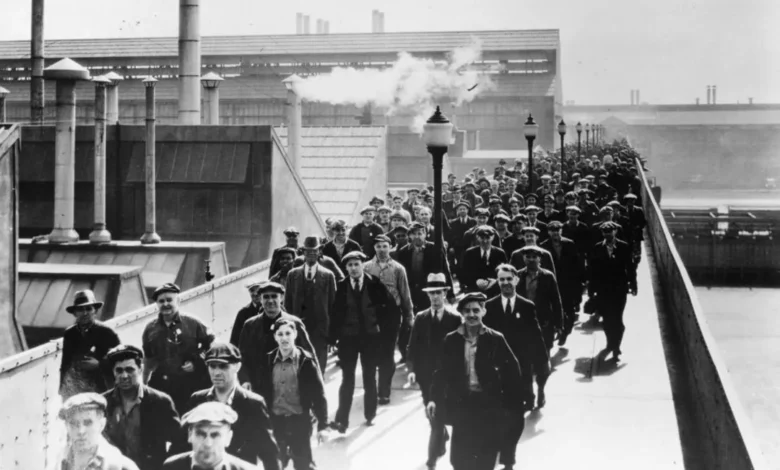
In the early 1900s, workers often labored six or even seven days a week under harsh conditions. The shift to a five-day schedule was driven by:
- Labor movements advocating for workers’ rights
- Increased productivity from better-rested employees
- Economic strategies to boost consumer spending
The model worked—and it became the global standard.
However, it was built for an industrial economy, not a digital one.
A System Built for a Different Era
The traditional workweek assumes that productivity is tied to time spent working. The more hours you put in, the more you produce.
But in today’s knowledge-based economy, that assumption is increasingly flawed.
Modern work involves:
- Creativity
- Problem-solving
- Decision-making
These activities are not linear. They don’t improve simply by increasing hours. In fact, excessive work can reduce efficiency and lead to burnout.
Enter Artificial Intelligence
Artificial intelligence is changing how work gets done.
From automating repetitive tasks to assisting in complex decision-making, AI is reducing the need for human effort in many areas.
Key Impacts of AI on Work:
- Automation of routine tasks
- Faster data analysis
- Enhanced productivity with fewer hours
- Support for creative and strategic thinking
AI doesn’t just make work faster—it changes its nature.
The Productivity Paradox
Despite technological advancements, many workers feel busier than ever. This is known as the productivity paradox.
Why does this happen?
- Work expands to fill available time
- Digital tools increase expectations for constant availability
- Efficiency gains are not always translated into reduced hours
AI has the potential to break this cycle—but only if work structures evolve alongside it.
The Case for a Shorter Workweek
One of the most discussed alternatives is the four-day workweek.
Benefits Include:
- Improved work-life balance
- Higher employee satisfaction
- Increased productivity per hour
- Reduced burnout
Studies and pilot programs have shown that reducing workdays does not necessarily reduce output. In many cases, it improves it.
This challenges the assumption that longer hours equal better results.
AI as a Catalyst for Change
Artificial intelligence can accelerate the transition to a more flexible work model.
By handling repetitive and time-consuming tasks, AI allows humans to focus on:
- Creative thinking
- Strategic planning
- Meaningful collaboration
This shift makes it possible to achieve the same—or better—results in less time.
Rethinking Productivity
The AI era requires a new definition of productivity.
Instead of measuring success by hours worked, organizations can focus on:
- Outcomes achieved
- Quality of work
- Innovation and creativity
This approach aligns better with the realities of modern work.
Challenges of Transition
While the idea of a shorter workweek is appealing, it is not without challenges.
Key Obstacles:
1. Cultural Resistance
Many organizations still equate long hours with commitment.
2. Industry Differences
Not all sectors can easily adopt flexible schedules.
3. Management Practices
Leaders must adapt to measuring performance differently.
4. Economic Considerations
Concerns about costs and productivity can slow adoption.
These challenges highlight the need for thoughtful implementation.
The Human Factor
Technology alone cannot redefine work. Human behavior and expectations play a crucial role.
Employees must learn to:
- Use AI effectively
- Manage time efficiently
- Focus on high-value tasks
At the same time, employers must create environments that support flexibility and trust.
Global Perspectives
Different countries are experimenting with new work models.
Some have adopted shorter workweeks, while others are exploring flexible schedules.
These experiments show that:
- There is no one-size-fits-all solution
- Cultural and economic factors influence outcomes
- Innovation often يبدأ بالتجربة
The global shift suggests that change is not only possible—it is already happening.
Work-Life Balance in the AI Age
One of the most important aspects of this transformation is its impact on quality of life.
A shorter, more efficient workweek can lead to:
- More time for family and personal interests
- Improved mental health
- Greater overall well-being
In a world where burnout is increasingly common, this shift could have profound benefits.
The Future of Work
Looking ahead, the future of work is likely to be more flexible, personalized, and technology-driven.
Possible developments include:
- Hybrid work models
- Task-based rather than time-based schedules
- Increased collaboration between humans and AI
The traditional five-day workweek may not disappear entirely, but it is likely to evolve.
Why This Moment Matters
The 100-year milestone of the five-day workweek is more than symbolic—it represents a turning point.
It is an opportunity to ask:
- Are we working smarter or just longer؟
- How can technology improve our lives—not just our output؟
- What kind of work culture do we want for the future؟
These questions are essential as we navigate the AI era.
Conclusion
The five-day workweek was once a revolutionary idea that transformed society. But every system has its time—and its limits.
In the age of artificial intelligence, we have the tools to rethink how work is structured. The challenge is not technological—it is cultural and organizational.
By embracing flexibility, redefining productivity, and leveraging AI responsibly, we can create a work model that is more efficient, more humane, and better suited to the realities of modern life.
The future of work is not about doing more in less time. It’s about doing what matters—better.
FAQs
1. Why was the five-day workweek created؟
To improve worker conditions, increase productivity, and support economic growth.
2. Is the five-day workweek outdated؟
It may not fully align with modern, AI-driven work environments.
3. How does AI affect working hours؟
AI can reduce the need for repetitive tasks, allowing work to be completed faster.
4. What is the four-day workweek؟
A model where employees work fewer days without reducing productivity.
5. Will AI replace traditional work schedules؟
Not entirely, but it is likely to reshape them significantly.